September is National Recovery Month, and it’s been held every year since 1989 to acknowledge people in recovery from substance use and mental health conditions, along with the people who help them.
That’s the “short version”. The longer one is rather interesting, because what Recovery Month is for has shifted a few times over 37 years. And what it stands for today could say something about how the country has come to think about the addiction recovery space.
When Is National Recovery Month?

National Recovery Month runs throughout September every year. In 2026, that means September 1 through September 30.
There’s no single national Recovery Day. States, cities, and organizations host their own events throughout the month, and many local governments issue statements in recognition of the recovery journey. If you’re looking for something to attend, think in terms of a whole month, not a date.
What Recovery Month Is For
Celebrating People in Recovery
The first purpose of this month is simple. Millions of people in the United States have endured a substance use or mental health condition and built a beautiful life on the other side of it. Most individuals still do this quietly because saying it aloud can carry a cost.
Recovery Month exists in part to mitigate that “cost”. When recovery is visible, it becomes believable. Someone at their lowest, who can’t envision a way out, is much more likely to believe that a way out exists after meeting someone who has found it.
Recognizing the People Who Do This Work
The observance began as a way of showing gratitude to treatment professionals, and that sentiment hasn’t disappeared. Counselors, nurses, peer specialists, social workers, prescribers, and recovery coaches do challenging work often with limited resources.
Changing How We Talk About Addiction
The third purpose of Recovery Month is significant in its own right. Addiction is one of the few health conditions where the language people use is still unquestionably moralizing. Where the assumption of personal failure stays stigmatizing enough to keep people from asking for help they so desperately need and deserve.
That assumption has real consequences. Individuals often put off care because they expect to be harshly judged. They avoid telling their doctor just how hard it’s been. They worry about a job, a license, or their children finding out. The hope for Recovery Month as a yearly campaign is to remedy that.
A Short History

1989: Treatment Works! Month
The observance began in 1989 under the name Treatment Works! Month. The focus was fairly narrow: recognize the work of addiction treatment professionals and make the case that treatment does, in fact, work.
That “framing” tells us something about where the field stood at the time.
1998 and 2011: The Name Changes
In 1998, the observance became National Alcohol and Drug Addiction Recovery Month. The change moved the focus from professionals to the people, from treatment as a service to recovery as an outcome.
In 2011, it was shortened to National Recovery Month and broadened again. This time to include mental health with substance use. This reflected a true clinical shift. The two conditions co-occur often enough that treating them as separate problems in separate facilities was no longer sensible, sustainable, or helpful.
2020: Faces & Voices of Recovery Takes Stewardship
For most of its history, the observance was coordinated by the Substance Abuse and Mental Health Services Administration (SAMHSA), which delivered an annual toolkit and theme.
In 2020, stewardship of Recovery Month was passed to Faces & Voices of Recovery, a national recovery advocacy organization that works alongside SAMHSA and a comprehensive network of partners.
The benefit is that Recovery Month is now led by the recovery community itself, rather than a federal agency. Materials, themes, and campaign assets now come from both organizations, and either is a reliable place to start if you’re planning something.
The 2026 Theme

SAMHSA’s 2026 toolkit features the theme “Recovery Happens Together.” The framing centers on connection, with the research showing that meaningful human connection supports resilience, hope, and sustained recovery.
The campaign builds its weekly messaging around advancing research, normalizing help-seeking, prioritizing whole-person care, and building connection through community.
Week 1 leans into recovery-ready communities, the idea that families, employers, faith communities, and local leaders all have a role in supporting someone’s recovery. Week 2 turns to storytelling, encouraging people in recovery to share what changed for them, the milestones reached, relationships rebuilt, and lives that look different now.
It’s a shift from last year’s theme, Recovery is REAL (Restoring Every Aspect of Life), which made the case that recovery isn’t only the absence of a substance but the return of everything a person lost along the way.
The through line between the two years holds true. Recovery isn’t something a person does alone, and it isn’t measured only by what “stops.” It’s also measured by what returns.
What Recovery Actually Means

There’s a working definition, and it’s worth knowing because it’s broader than most people assume!
SAMHSA defines recovery as a process of change through which individuals improve their health and well-being, live self-directed lives, and strive to reach their full potential.
Notice what’s missing from that sentence. No particular substance, or particular treatment. No mention of total abstinence, either. It describes a direction of travel rather than a final destination, and it puts the person, not the clinician, in charge.
The same “framework” recognizes 4 dimensions that can support a person in recovery: health, home, purpose, and community.
Recovery Month in Georgia
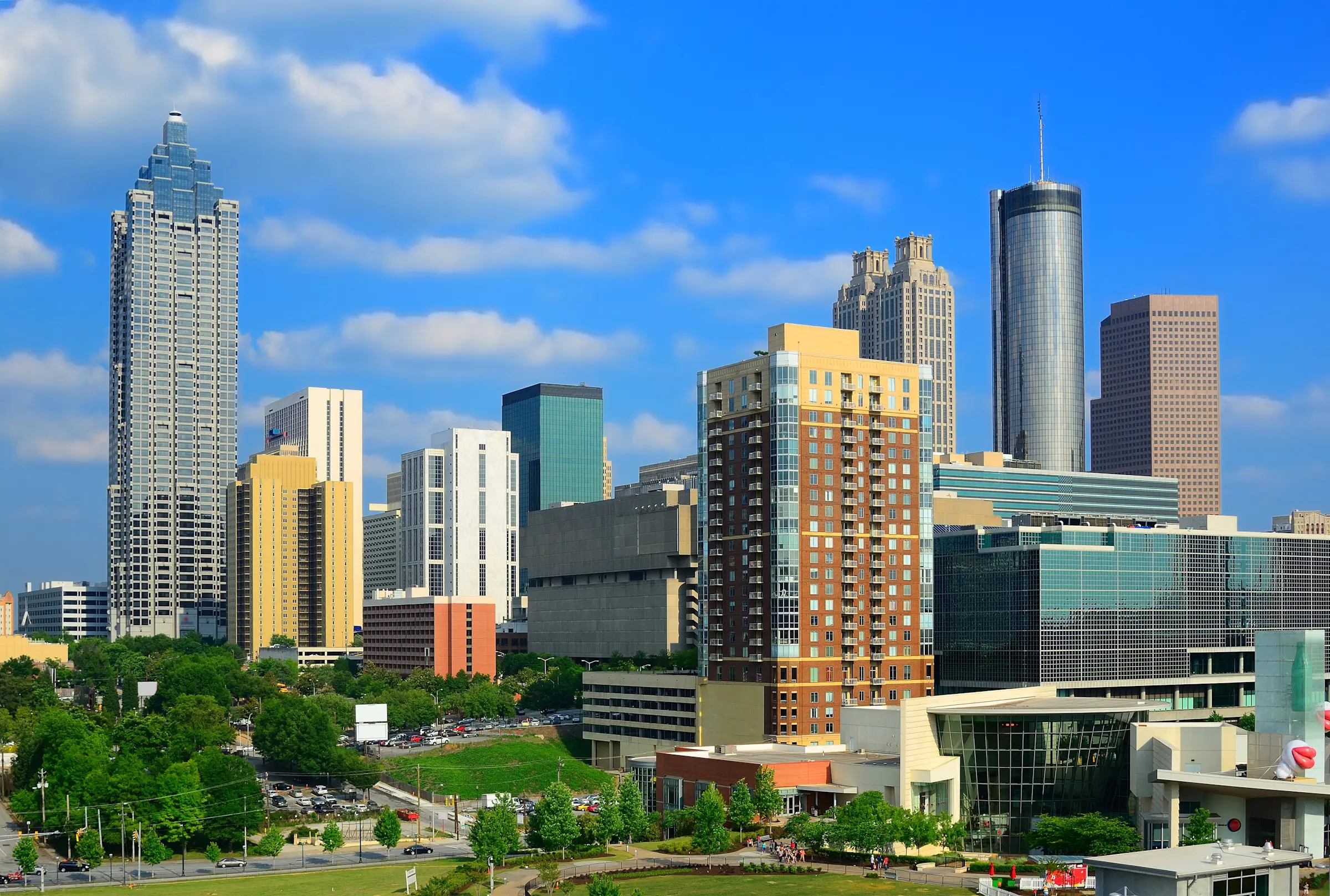
Where Georgia Stands
Georgia has seen verified improvement in overdose deaths over the past couple of years, in line with the wider national trend. In 2025, 1,663 people died from overdoses in the state, according to CDC data reported in mid-2026.
That marks a significant year-over-year decline, part of a multi-year drop that has continued since deaths peaked earlier in the decade, though Georgia’s rate of improvement trailed slightly behind the national average.
Part of that progress traces back to how the state has spent its opioid settlement funds. Georgia’s Opioid Abatement Trust is expected to provide more than $1.3 billion over the next 18 years, and more than $112 million has already gone out in grants for treatment, prevention, and harm reduction. This also includes mobile treatment units and naloxone kits distributed to every school system in the state.
That’s good news, and it deserves to be reported on because the story people hear about addiction is almost never one about things getting better.
The story is also incomplete. Fewer deaths isn’t the same as less need. Non-fatal overdoses, stimulant and polysubstance involvement (fentanyl now often turns up mixed into cocaine and methamphetamine).
The gap in access between rural counties and metro Atlanta looks different from the headline number. For the most current figures and how they’re collected, the Georgia Department of Public Health’s drug surveillance page is the primary source.
Events Across the State
Local Recovery Month events run throughout September across Georgia. Expect a familiar mix, including recovery walks and rallies in metro Atlanta, smaller vigils and resource fairs in North Georgia, county proclamation signings, and gatherings organized by local recovery community organizations farther from the metro area.
Because dates, venues, and organizers shift from year to year, sometimes week to week, the most reliable way to find what’s happening near you is the Faces & Voices of Recovery event calendar. It’s regularly updated as organizers submit their own listings, as well as listings by your county public health department or the nearest recovery community organization.
Georgia Organizations Doing This Work
A handful of organizations rally recovery support across Georgia:
- Georgia Council for Recovery is the state’s leading recovery community organization. It runs the CARES Academy, which has trained more than 450 certified peer recovery specialists whose services are billable to Medicaid. The council also leads statewide advocacy and stigma-reduction work, including the Georgia Recovers campaign.
- Georgia Harm Reduction Coalition provides naloxone distribution, overdose prevention education, and harm reduction services statewide. The coalition has a strong presence in metro Atlanta and Stone Mountain.
Ways to Take Part This September
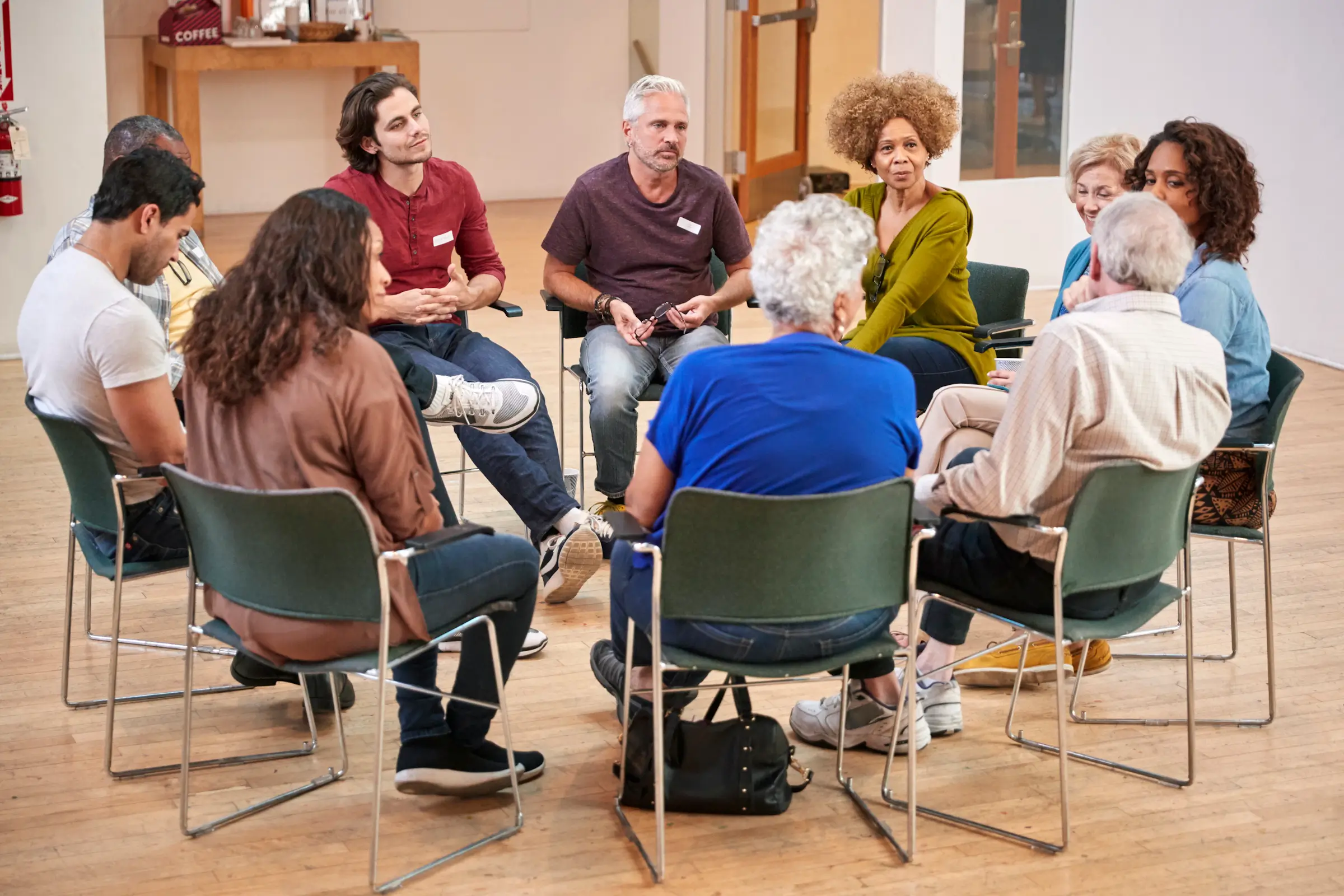
If You Are in Recovery
You don’t have to do anything. That’s important to say first. September brings a lot of encouragement to share your story publicly, but that’s not right for everyone, especially those in early recovery.
You could go to a meeting you haven’t been to in a while. Reach out to someone who’s also in recovery, or show up at a local event.
If You Are Supporting Someone
Start by learning the appropriate language. The small changes in how addiction is talked about can change how people respond to being asked about it.
Why not attend an open meeting? Most 12-step meetings run open sessions anyone can join, and an hour in that room will teach you a lot.
If You Are a Veteran
Veterans carry a higher risk for substance use conditions for reasons related to service, not character. They’re also among the least likely groups to ask for help. If that describes you, or someone you love, the Veterans Crisis Line is available at any hour: dial 988, then press 1.
If You Work in Health Care, Education, or HR
You’re in a fortunate position to make a lasting change this month. How about reviewing a policy or making your employee assistance program more visible? Look at the language in your own notes and forms. Find out where you’d refer someone if they told you they needed recovery support.
Recovery Month FAQs
Is September National Recovery Month?
Yes, National Recovery Month has been honored every September since 1989.
What Color Represents Recovery Month?
Purple ribbons are commonly seen in September, representing various causes, although this is more a convention than an official designation. The same color is also used for overdose awareness.
Who Runs Recovery Month Now?
Faces & Voices of Recovery has led Recovery Month since 2020, working alongside SAMHSA and an extensive network of national and local partners. Both organizations publish freely available materials every year.
What Is the 2026 Theme?
“Recovery Happens Together.” SAMHSA’s 2026 toolkit centers the campaign on connection. The idea that meaningful relationships, whether with family, employers, faith communities, or peers, support long-term recovery in a way that separateness can’t.
Sustaining It After September

What changes anything is what people do differently on October 1. Maybe one policy is reviewed and amended to benefit those in the recovery space. Perhaps another person now knows how to use naloxone and carries it with them. Or how about the family that stopped using an inappropriate word?
If you or someone you care about needs help to find support in Georgia, we offer treatment options, meetings, harm reduction services, and family support across the state.
If you are in immediate danger, call 911. For crisis support, call or text 988. Veterans can dial 988 and press 1.